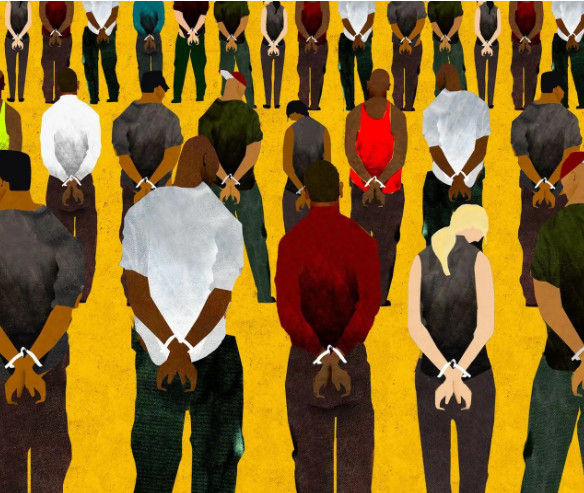
People keep calling this Vancouver’s shift, but the legal changes were provincial and federal, not just municipal. In April 2024, B.C. moved to make illicit drug use illegal in public spaces, including hospitals, transit, and parks. Then the province’s decriminalization exemption expired on January 31, 2026 and was not renewed. Since February 1, possession is again illegal anywhere it is not specifically exempt. For Indigenous peoples, this is not a technical policy tweak. It is another moment when the state reaches first for control, visibility, and punishment instead of asking what keeps people alive.
What changed in practical terms is clear. B.C. now says possession of any amount of illicit substances is illegal outside exempt spaces such as supervised consumption and drug-checking sites, while overdose prevention sites remain allowed under separate authority. Existing supervised consumption, overdose prevention, and drug-checking services did not become illegal when decriminalization ended, and harm reduction supply distribution also remains lawful. The Good Samaritan Drug Overdose Act still protects people who call for emergency help at an overdose scene from simple-possession charges and some related breaches, although it does not protect against trafficking, production, outstanding warrants, or other offences.
The people who carry the heaviest burden under this kind of change are not abstract “users.” They are people who are unhoused, poor, street-involved, criminalized already, or trying to survive violence. B.C.’s own public-health material says police can now seize substances outside exempt spaces, and its report to Health Canada says street-level seizures are associated with increased overdose risk, can deter people from calling for help, and disproportionately harm Indigenous people, racialized people, unhoused people, and people in sex work. BCCDC also notes that supervised consumption and overdose prevention sites are not available in all communities or at all hours, and that people without housing are more likely to use in public. The practical effect is plain: when legality depends on being indoors, having privacy, reaching a site in time, or staying connected to formal services, the people with the fewest material protections are the ones pushed back toward danger.
That is why the federal and provincial messages now feel split. Ottawa still describes its overdose response as a public health and safety approach aimed at connecting people to services and reducing stigma. Health Canada still says safer supply can prevent overdoses, save lives, and connect people to care, and it says supervised consumption services save lives, reduce overdose risk, and connect people to social supports and treatment. At the same time, B.C. has moved all prescribed alternatives into a witnessed-dosing model, with limited exemptions, and has ended the broader possession exemption entirely. For people already living at the edge of shelter, transport, pharmacy access, and institutional trust, that means help is becoming more conditional and more supervised precisely when the toxic supply remains deadly.
This retreat is happening in the middle of an ongoing death toll, not after the crisis passed. B.C. reported 1,826 unregulated drug-toxicity deaths in 2025. In January 2026 alone, 150 people died, which the province described as 4.8 deaths per day. Smoking remained the dominant mode of consumption in those deaths. That matters because criminalization does not land on a stable landscape. It lands in the middle of a poisoned supply, uneven access to services, and a reality where people are still dying every day.
For Indigenous peoples, the burden is even sharper. FNHA reported that First Nations people made up 3.4% of B.C.’s population but 15.6% of toxic drug poisoning deaths in January to June 2025. In that same period, First Nations people died at 5.4 times the rate of other B.C. residents, and First Nations women died at 8.5 times the rate of other female B.C. residents. Even B.C.’s own prescribed-alternatives policy says culturally safe care free of Indigenous-specific racism and discrimination must be fundamental to addressing the crisis.
An Indigenous harm-reduction lens starts somewhere different than the state does. Thunderbird Partnership Foundation frames harm reduction as grounded in First Nations culture, values, and teachings, and as a rejection of colonial moral judgment. Its language is about protecting life, not sorting people into the deserving and undeserving. That matters because criminalization always arrives wearing the language of order, safety, and accountability. Indigenous harm reduction asks a deeper question: does this policy protect life, kinship, dignity, and the possibility of healing, or does it isolate people further from them?
That question becomes even more urgent for Indigenous women, girls, trans, and Two-Spirit people. The Native Women’s Shelter of Montreal’s Iskweu Project told Parliament that, because culturally specific healing services are scarce, many Indigenous survivors of violence and the MMIWG2S+ crisis use substances to cope with trauma rooted in colonization. The brief also documents forced dependency, situations in which abusive partners or traffickers use substances as a weapon of control, and it calls for an end to the criminalization of survivors who use substances to survive trauma. In other words, for many Indigenous women and gender-diverse people, drug policy is not only about overdose. It is also about coercion, disappearance, femicide, and whether systems recognize violence when it is happening.
Montreal should not imagine itself insulated from these lessons. Quebec was never part of B.C.’s decriminalization exemption, and section 4(1) of the federal Controlled Drugs and Substances Act still makes possession an offence except where the law or an exemption authorizes it. Meanwhile, Montreal’s own public-health data show suspected drug-intoxication deaths rising from 146 in 2021 to 229 in 2024, with 191 reported on a preliminary basis for 2025. Emergency interventions at supervised consumption sites also rose every year from 2020 to 2024, and community naloxone redistributions increased to 2,148 per month in 2024. Montreal is not facing the exact same policy story as B.C., but it is living inside the same toxic-supply emergency.
Quebec’s own policy direction should concern community members here. Bill 103, adopted in 2025, created a ministerial-authorization regime for supervised consumption sites outside Santé Québec facilities, bars new sites within 150 metres of schools and child-care facilities, and gives sites already operating on November 13, 2025 a deemed authorization for four years. Montreal’s public-health directors responded by urging the province to explicitly affirm the importance of supervised consumption in the overdose strategy, create a clear and efficient authorization process, and provide a permanent acquired-rights clause for sites already operating. That matters because policy can tighten without using the language of criminal law. It can tighten through delays, siting limits, revocation risk, and uncertainty.
We should also be honest about what harm reduction does. This is not ideology. Health Canada says supervised consumption services save lives, reduce overdose risk, and connect people to housing, employment, health care, and treatment. A recent Montreal study found that after the city’s four supervised consumption sites opened, hospitalization trends for serious injection-related infections declined, suggesting these sites may prevent infections from progressing into more severe complications. The lesson is not that supervised consumption is the whole answer. The lesson is that it is a proven part of keeping people alive long enough to access the rest of the answer.
As of March 22, 2026, the Indigenous Health Centre of Tiohtià:ke’s harm reduction program is listed at 2100 Avenue de Marlowe, suite 236, Monday to Friday from 8:30 a.m. to 4:30 p.m., with harm reduction items, hygiene items, and naloxone for First Nations, Inuit, and Métis community members, including 2-Spirit, trans, non-binary people, youth, adults, and Elders. The Montreal Indigenous Community Network also points people toward the Native Women’s Shelter addictions program, Individual Addiction Support through the Indigenous Health Centre, the Native Friendship Centre’s Kaie:ri:nikawera:ke Day Centre and Ka’wàhse Street Patrol, Projets Autochtones du Québec’s managed alcohol and housing supports, Indigenous Health Navigators, Résilience Montréal, Doctors of the World’s Indigenous navigation program, and other culturally grounded options.
The lesson from B.C. is not that harm reduction failed. The lesson is that harm reduction was narrowed, fenced in, and made to answer to policing, public-order language, and administrative control while the toxic supply kept killing people. Montreal should read that as a warning. The work here is not to copy a retreat into punishment. It is to defend supervised consumption, naloxone, and drug checking; expand low-barrier housing and anti-violence supports; protect people who use drugs from being pushed into isolation; and fund Indigenous-led care that treats culture, safety, and dignity as part of survival, not as optional extras once someone proves they are “ready.”